Fully Involved: An important update from us. 2.25.26
Hello,
We are pleased to announce that the application period is now open for MSA’s Globe Gear Giveaway. Now in its 15th year, this partnership between MSA Safety and the NVFC helps volunteer fire departments obtain needed personal protective gear. In 2026, 13 departments will each receive 4 sets of Globe® turnout gear and MSA Cairns® helmets. A press release is attached to share with your audience.
Best,
Kimberly
Kimberly Quiros
Chief of Communications
National Volunteer Fire Council
712 H Street, NE, Ste. 1478
Washington, DC 20002
P: 202.887.5700
Howdy, friends!
The fire service does not have a research problem. In fact, research regarding the realities of work in emergency services is plentiful. We do, however, face one glaring challenge: translation and accessibility.
There is outstanding research happening on firefighter health, exposure, performance, and safety. But far too often it lives quietly in journals, locked behind paywalls, while the people who could benefit from its findings are making decisions at a kitchen table, in the bay, or on the fireground without access to it.
So, we built something to change that.
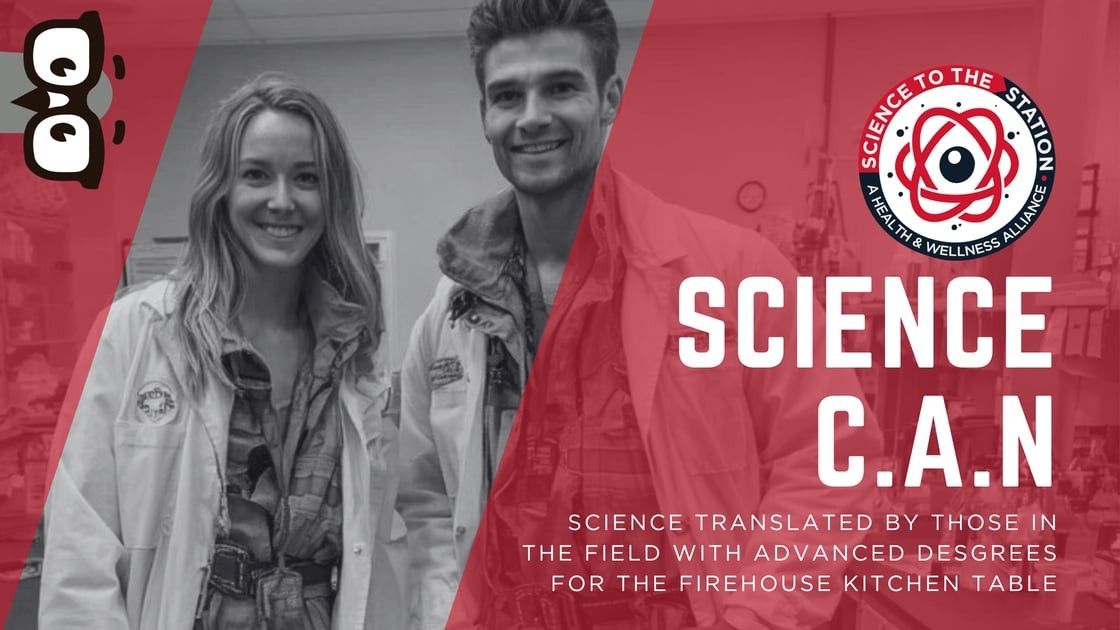
Introducing S.C.A.N.: Science, Conditions, Actions, & Needs.
These are new Science to the Station resources designed to take research and turn it into something usable. Short. Practical. Evidence-based. Built for real fire and EMS humans doing real jobs.
Our first S.C.A.N. focuses on PFAS exposure and cancer risk, centering on something rarely given the attention and concern it is due: the hierarchy of controls.
For years, the conversation has focused heavily on PPE. PPE matters. A lot. We all know this, but the science is clear: PPE alone will not solve our exposure problem. The greatest risk reduction comes from layered protection across the hierarchy of controls--elimination and substitution where possible, engineering controls, administrative practices, and yes, PPE as one of many critical layers.
This S.C.A.N. distills academic text into something tangible; the research presented here indicates that risk reduction occurs not due to a singular piece of gear or protective measure, but instead across the entire hierarchy: from tactics- and suppression-approaches to clean cab concepts, decon practices, station design, material choices, and leadership decisions --all of which shape degree of responders' exposure to carcinogens every single day.
SO, HERE'S THE FIRST!!!
Hierarchy of Contamination Control in the Fire Service: Review of Exposure Control To Reduce Cancer Risk
ABOUT THIS STUDY
Firefighters face higher cancer rates than the general population.
You're exposed to cancer-causing chemicals through your skin, via inhalation, and even through accidental ingestion. The
research contained here reviewed every major study on contamination control and
organized the findings using a proven safety framework. The goal:
give you and your department the best strategies to protect yourself
from the gear you wear to how you design your station.
S.C.A.N.s are a work product of the Science to the Station Fire & EMS Scholars Alliance: a collaborative network of advanced degree holding practitioner-scholars, currently working in the fire/ems field, committed to making science accessible, relevant, and actually usable for everyday on-the-job applications. These are people who understand research design and understand the job, working together to ensure evidence-based research does not just get published. It gets used!
Learn more about the Fire & EMS Scholars Alliance here:
https://www.science2station.org/scholars
WHAT IF I'M NOT A FIRE/EMS RESPONDER, BUT AM A RESEARCHER IN THIS AREA?
If you are an academic researcher studying topics that intersect with fire and EMS: health, sleep, toxicology, human performance, behavioral health, exposure science, organizational culture, or anything else that could improve outcomes - we want you in THIS ecosystem!
You do not have to be a firefighter to contribute meaningful research to the fire service. But you do need pathways for that work to reach the field and inform practice.
That is exactly why we created the Fire & EMS Researchers Alliance.
This is an open invitation for non fire/EMS service field practitioner researchers to collaborate, share work, and help ensure that what you study actually reaches the people it was meant to support.
Learn more or join us here:
https://www.science2station.org/researchers-alliance
Help us spread it!!!
Just like when a "Breaking Science" drops:
Read it.
Share it.
Email it.
Print it.
We are serious about closing the gap between research and practice.
S.C.A.N.s are one way we are doing that. The Scholars and Researchers Alliances are another. If your interested and eligible think about joining them TODAY!
More coming soon. We are just getting started!!!
Dr. Sara Jahnke
President
Science to the Station
Because science belongs in the station, not just the journal.
GSFA News